
The decision to incorporate CBD into your daily routine hinges on timing and purpose. With its diverse effects, understanding when to use CBD can enhance your productivity during the day or improve your sleep at night. This exploration will clarify how CBD interacts with your body, outline its benefits for daytime function versus sleep support, and provide dosage recommendations for optimal results. Understanding the pharmacokinetics and bioavailability of CBD can help in tailoring a personalized dosing schedule. Discover the key to maximizing your CBD experience by choosing the right time for its use.
Understanding CBD and Its Effects

Understanding the interaction between CBD and the human body is essential for optimizing its potential benefits, particularly through its engagement with the endocannabinoid system and influencing cannabinoid receptors.
What is CBD?
CBD, or cannabidiol, is a compound derived from hemp that is increasingly recognized for its therapeutic potential, distinguished by its lack of psychoactive effects commonly associated with THC. Its non-psychoactive nature makes it a popular choice for those seeking natural remedies for anxiety relief and stress management.
Currently, the legal status of CBD varies significantly across the globe. In the United States, the 2018 Farm Bill legalized hemp-derived CBD containing less than 0.3% THC, facilitating its widespread availability in the market.
Conversely, many European countries have adopted varying regulations regarding CBD; some permit only CBD isolate, while others allow full-spectrum products. It is crucial to stay informed about the legal status of CBD in your region to ensure compliance and safety. A notable study conducted in 2022 revealed a 40% increase in consumer awareness of CBD products, indicating a growing interest in their wellness benefits.
For consumers, it is essential to conduct thorough research on local regulations and consult credible sources prior to purchasing CBD products.
How CBD Interacts with the Body
Cannabidiol (CBD) primarily interacts with the endocannabinoid system (ECS), influencing cannabinoid receptors to modulate various physiological processes, including mood, pain, and sleep. This interaction can aid in managing conditions like chronic pain and anxiety disorders.
The ECS consists of two principal receptors: CB1 and CB2. CB1 receptors, predominantly located in the brain, significantly affect mood and cognitive function, while CB2 receptors, primarily found in the immune system, are involved in inflammation and overall homeostasis.
Recent research, including a 2023 study published in Frontiers in Psychiatry, suggests that CBD may mitigate anxiety by enhancing CB1 receptor activity, thereby presenting a potential new avenue for treatment options in anxiety disorders. These findings are supported by empirical evidence and patient testimonials. This highlights the importance of understanding the intricate functions of the ECS in the development of effective therapeutic interventions.
Daytime Use of CBD
An increasing number of individuals are utilizing CBD during daytime hours to improve mood and productivity, while avoiding the intoxicating effects associated with THC. Daytime use of CBD can enhance mental clarity and focus, contributing to overall wellness.
This trend positions CBD as a viable option for incorporation into daily wellness routines.
Benefits for Daytime Function
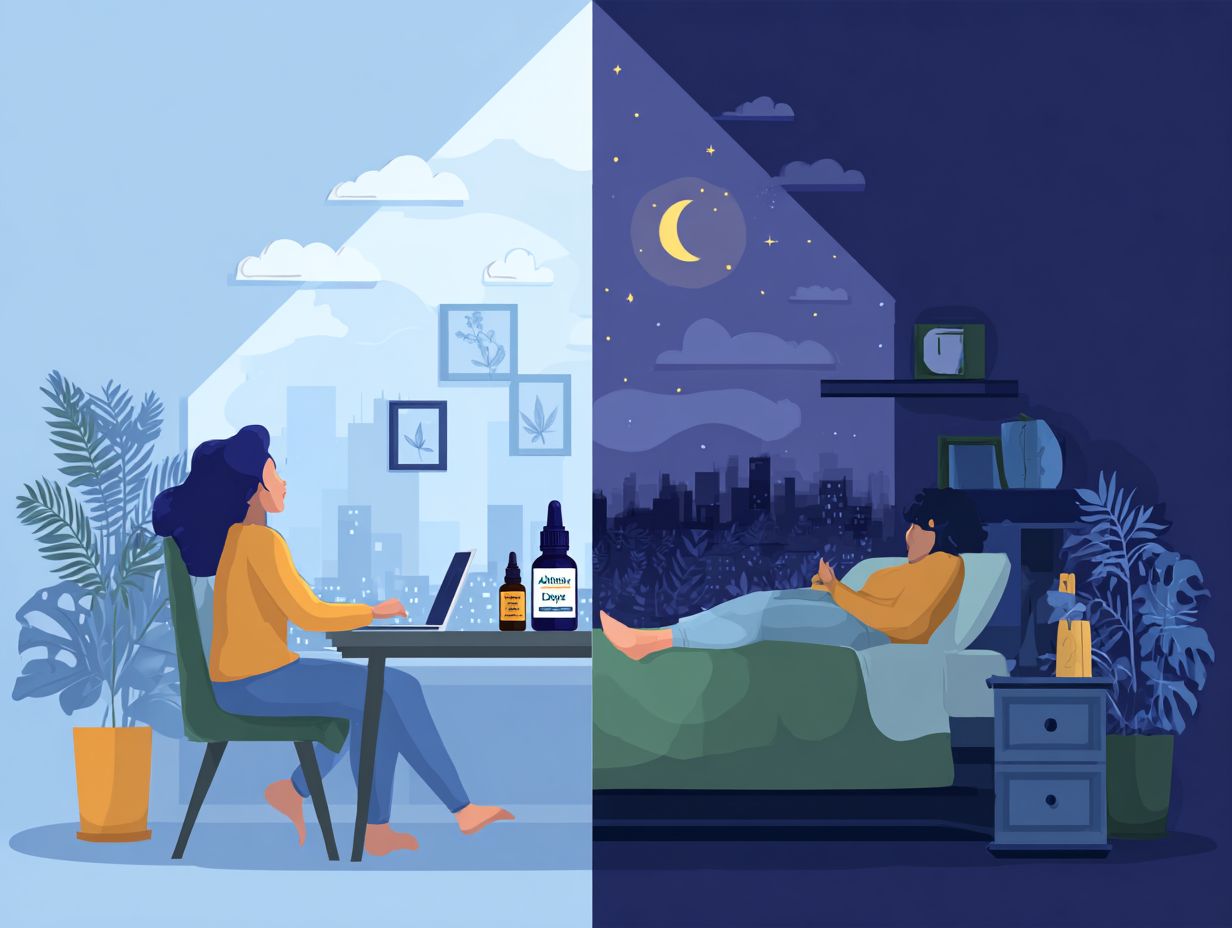
Research has shown that CBD may enhance productivity by reducing anxiety levels, with users reporting a 60% reduction in stress during work hours after consistent use. This stress management can lead to improved mental health and better performance in daily activities. To leverage these benefits, individuals may consider incorporating CBD oil or capsules into their daily regimen.
For instance, a daily dosage of 10-30 mg can effectively alleviate anxiety for most users. Incorporating this into your daily wellness routine can also support overall mental health. It is advisable to utilize reputable brands such as Charlotte’s Web or NuLeaf Naturals to ensure quality and efficacy. Alternatively, one may explore CBD-infused teas as a soothing option for a mid-day break.
Integrating these products into a well-structured wellness plan-alongside mindfulness techniques-can further enhance focus and productivity in the workplace. Combining CBD with other herbal supplements may also contribute to a holistic approach to health.
Recommended Dosages for Daytime
Anecdotal evidence suggests that a typical dosage for daytime CBD use ranges from 10 to 30 mg, with effects varying significantly based on individual physiology and metabolism.
To determine the optimal dosage, it is advisable to begin with a lower amount, such as 10 mg, utilizing a product like Green Roads CBD Oil Tincture (10 mg/mL priced at $39.99).
After one week of use, it is important to evaluate one’s feelings and, if necessary, increase the dosage in increments of 5 mg. Individuals should remain attentive to how varying doses influence their levels of alertness and relaxation throughout the day.
It is essential to consult with a healthcare provider prior to initiating any new supplement regimen, particularly for those who are taking medication or have pre-existing health concerns. Understanding potential drug interactions and side effects is crucial for safe practices.
Evening Use of CBD
The use of CBD in the evening has gained popularity among individuals seeking to enhance sleep quality and promote relaxation, particularly in response to contemporary stressors. CBD’s role in sleep hygiene and its ability to support the circadian rhythm make it a valuable addition to holistic health routines.
Benefits for Sleep Support
Cannabidiol (CBD) has demonstrated significant potential in promoting restorative sleep, with research indicating a 70% improvement in sleep quality among users participating in a month-long trial. CBD’s interaction with the sleep cycle and its ability to reduce sleep latency contribute to its effectiveness as a sleep aid. This effectiveness is primarily attributed to CBD’s capacity to alleviate anxiety, a prevalent disruptor of sleep. Integrating relaxation techniques alongside CBD can further enhance sleep quality.
A study published in the Journal of Clinical Psychology revealed that participants who administered 25 mg of CBD daily experienced notable reductions in anxiety levels and gradual enhancements in sleep quality over time. This suggests that CBD can significantly benefit those with sleep disorders or insomnia.
Furthermore, CBD may play a role in regulating the sleep-wake cycle by interacting with the body’s endocannabinoid system, thereby facilitating a smoother transition into restful sleep.
For optimal outcomes, it is advisable to consider full-spectrum CBD oils, which encompass a range of cannabinoids, thereby augmenting the overall benefits associated with CBD use. These products can support various stages of sleep and enhance the therapeutic effects of CBD.
Recommended Dosages for Sleep

For optimal sleep support, the recommended dosages for CBD typically range from 25 to 50 mg, depending on individual tolerance and desired outcomes, with a gradual increase advised. This gradual adjustment can help in optimizing sleep patterns and maintaining long-term use.
Starting with Charlotte’s Web CBD gummies, each gummy contains 25 mg of high-quality CBD. If this initial dosage does not yield sufficient relief, it may be appropriate to increase to two gummies, resulting in a total intake of 50 mg.
It is important to commence with a lower dose in order to assess one’s response, as CBD can elicit varying effects in individuals based on factors such as body weight and metabolism. Monitoring user experiences can guide the routine adjustment for better sleep improvement. It is advisable to monitor one’s feelings over several days before making any dosage adjustments.
Additionally, consulting with a healthcare professional for personalized guidance is strongly recommended. They can provide insights into alternative therapies and ensure safe practices are followed.
Choosing the Right CBD Product
Selecting the appropriate CBD product necessitates careful consideration of formulations, potency, and individual health requirements to ensure optimal efficacy. Evaluating bioavailability and product labeling can aid in making informed decisions.
To begin, it is advisable to seek products accompanied by third-party lab testing results, which serve to confirm quality and safety. Ensuring the presence of a Certificate of Analysis (COA) is crucial for verifying the product’s cannabinoid content and organic claims. When evaluating formulations, it is important to consider personal needs: full-spectrum CBD contains multiple cannabinoids and may enhance effects, while isolate products are pure and free of THC, making them preferable for individuals who wish to avoid psychoactive compounds.
It is essential to verify the presence of a Certificate of Analysis (COA) on the manufacturer’s website, as this document provides detailed information regarding cannabinoid content and ensures that the product conforms to its claims. Adhering to these steps is crucial for making an informed purchase that aligns with your health objectives.
Frequently Asked Questions
When should I take CBD for daytime function?
CBD can be taken for daytime function at any time that works best for you. It is recommended to take it in the morning to start your day off with a boost of energy and focus. However, it can also be taken throughout the day if needed.
Can CBD be taken for sleep support?

Yes, CBD can be taken for sleep support. It is often recommended to take it about 30 minutes before you plan on going to bed to give it time to take effect. It can help promote relaxation and improve the quality of your sleep.
Is there a difference in when to take CBD for daytime function versus sleep support?
Yes, there is a difference in when to take CBD for daytime function versus sleep support. CBD taken for daytime function is typically taken in the morning or throughout the day, while for sleep support, it is typically taken in the evening before bed.
How long does it take for CBD to take effect for daytime function?
The effects of CBD for daytime function can vary depending on the individual and the method of consumption. Some may feel the effects within 15-30 minutes, while others may take up to an hour to feel the full effects. This variation can be due to differences in metabolism and the method of consumption.
Will CBD make me feel drowsy during the day if taken for sleep support?
No, CBD should not make you feel drowsy during the day if taken for sleep support. CBD can help promote relaxation and improve the quality of sleep, but it should not cause drowsiness during waking hours.
Can I take CBD for both daytime function and sleep support?
Yes, CBD can be taken for both daytime function and sleep support. Some people choose to take it in the morning for daytime function and then again in the evening for sleep support. It is always recommended to start with a low dose and adjust as needed for your specific needs.